
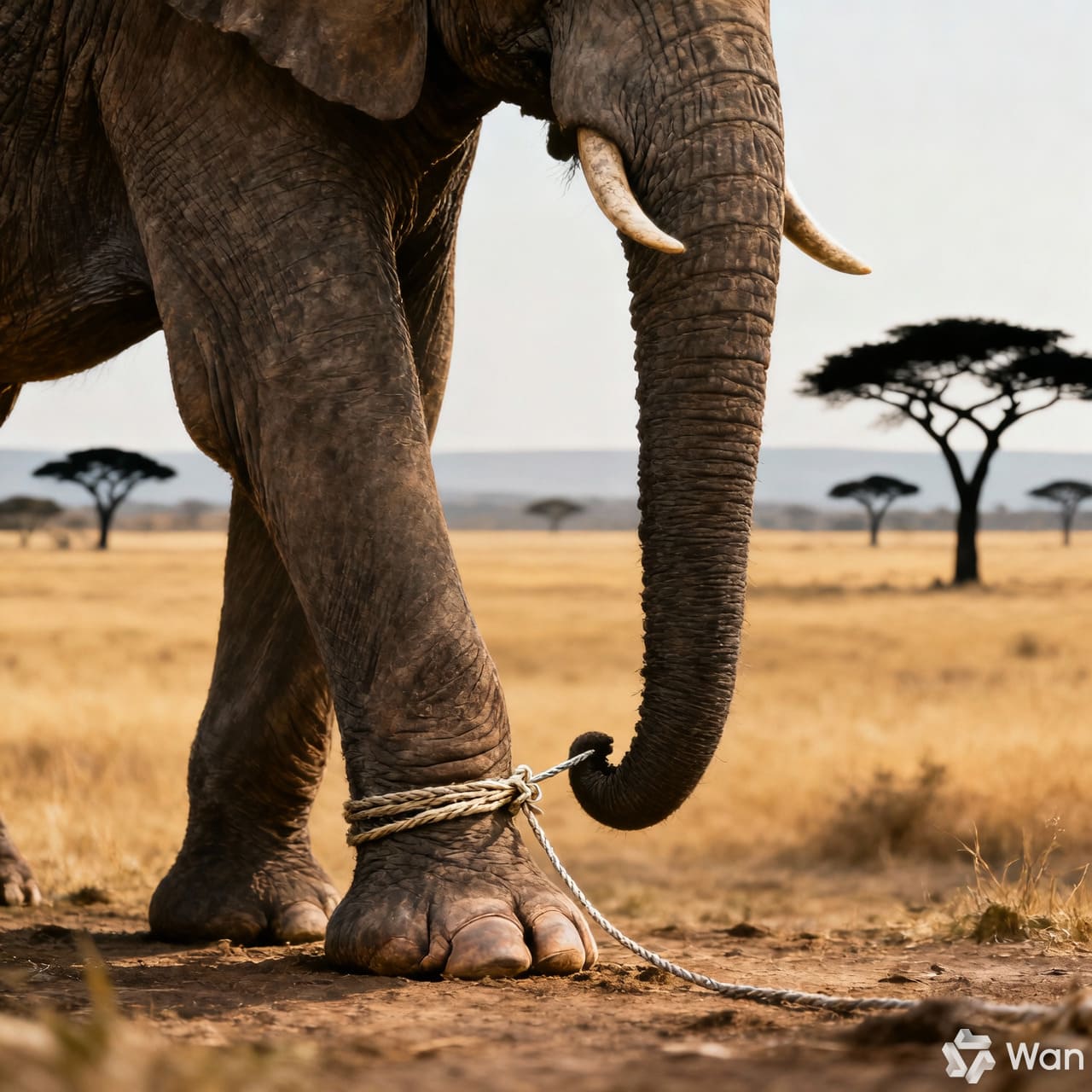
Elephants With Little Ropes
Watch the video
Breaking the Strings: The Zookeeper, Limiting Beliefs, and Recovery
In the African savanna, a Bronx zookeeper encounters elephants in an open enclosure without cages or walls. At first, it seems impossible that such powerful animals remain confined. Looking closer, he notices a thin string tied around each elephant’s ankle. The African zookeeper explains: as calves, the elephants were tethered with ropes they could not break. Over time, they internalized the belief that resistance was futile. Now, as adults, they are strong enough to snap the string eƯortlessly, yet they never try.
This parable reveals the invisible prison of limiting beliefs. The elephants are not bound by physical force but by domestication—the conditioning of their minds. Their captivity is self-imposed, rooted in memory and fear. For those in addiction recovery, the lesson is profound: courage to test our limits breaks the string; excuses, even valid ones, keep us chained.
Limiting Beliefs and Domestication
Limiting beliefs are internalized narratives that shape perception and behavior. They whisper: “I’ll never change,” “I’m not worthy of love,” “I always fail.” These statements become mental scripts, repeated until they feel like truth.
Domestication—the process of conditioning through repeated reinforcement—cements these beliefs. Just as elephants learn not to resist, people learn to accept distorted identities. Addiction thrives in this soil, feeding on the illusion that escape is impossible. Even after sobriety begins, these beliefs linger, tethering individuals to shame and fear.
Selfishness and Fear: The Hidden Strings
The Alcoholics Anonymous Big Book declares: “Selfishness—self-centeredness! That, we think, is the root of our troubles.” This selfishness is not always blatant. It often hides beneath fear: fear of rejection, fear of failure, fear of being exposed. Fear places the self at the center, clinging to preferences and avoiding discomfort.
In recovery, selfishness appears as subtle resistance: praying only to feel better, isolating when sadness strikes, holding grudges instead of forgiving, seeking comfort rather than offering it. These reactions are strings of domestication. They keep individuals tethered to old patterns, even when sobriety has been achieved.
Recognition: The First Act of Courage
The elephants could break free if they recognized the string for what it is—flimsy, powerless against their strength. Similarly, recovery begins with recognition. Step Four of AA calls for a searching and fearless moral inventory, exposing the “always” and “never” thoughts that bind us.
Recognition is courageous confrontation. It means facing shame, fear, and selfishness without turning away. It means admitting: “I have believed lies about myself. I have accepted ropes that no longer hold power.” This act of recognition is radical acceptance. It acknowledges the past without clinging to it and refuses to let domestication dictate the future.
Outgrowing the Past Self
Recovery is not merely abstinence from substances. It is the rebirth of identity. Outgrowing the past self requires dismantling the ropes of domestication and stepping into truth.
Inventory of Reactions
By comparing personal reactions to the Saint Francis Prayer, individuals uncover selfish patterns. Do I seek to be comforted rather than to comfort? Do I crave love more than I give it? These questions expose the strings.
Rewriting the Code
Once identified, limiting beliefs can be rewritten. Neuroplasticity proves the brain can form new pathways. Pausing before reacting, choosing selfless action, and practicing forgiveness rewires the mind.
Spiritual Growth
The Saint Francis Prayer offers a roadmap: replace hatred with love, despair with hope, sadness with joy. This is not about sainthood but about spiritual progress.
Daily Practice
Transformation requires repetition. Morning meditation sets intention; evening reflection tracks progress. Each day becomes a chance to snap another string.
Outgrowing the past self is not instant. It is a process of courage, repetition, and faith. But each act of selflessness weakens the ropes until they fall away.
Breaking the Strings: Action Over Excuses
Excuses are the language of domestication. They rationalize captivity: “I can’t change because my past is too heavy.” Like the elephants, excuses keep people tethered even when freedom is possible.
Breaking the strings requires action. In recovery, action means attending meetings even when tired, offering forgiveness even when pride resists, serving others even when self-comfort beckons, practicing radical acceptance even when fear whispers. Action proves the strings are flimsy. Each courageous step snaps another tether, revealing strength that was always present.
Faith and Selflessness
Faith is the opposite of fear. Where fear clings to self, faith trusts in a Higher Power and in the possibility of transformation. The Saint Francis Prayer embodies this faith: “Lord, make me a channel of your peace.”
Selflessness is the fruit of faith. It shifts focus from self-centeredness to service. In recovery, selflessness manifests as listening, encouraging, forgiving, and loving. It is by self-forgetting that one finds. Faith and selflessness together dismantle domestication, replacing selfish scripts with spiritual goals.
Psychology of Domestication in Recovery
From a psychological perspective, domestication is conditioning. Addiction reinforces certain behaviors until they feel inevitable. Recovery challenges this conditioning through:
Cognitive Behavioral Therapy (CBT): Identifying distorted thoughts and replacing them with rational, selfless ones.
Dialectical Behavior Therapy (DBT): Practicing radical acceptance and mindfulness to face conditioned beliefs without clinging.
Positive Psychology: Cultivating joy, gratitude, and purpose to outgrow shame.
12-Step Principles: Inventory, confession, prayer, and service to dismantle selfishness.
Together, these approaches rewire the brain, proving that domestication is not destiny. The strings can be broken.
Stepping Into Truth
Truth is the recognition that the strings are illusions. It is the realization that identity is not fixed by past failures. Stepping into truth means embracing agency, courage, and selflessness.
For someone in recovery, stepping into truth looks like admitting past shame but refusing to be defined by it, accepting fear but choosing faith, recognizing selfishness but practicing service, seeing the ropes but snapping them through action. Truth liberates. It transforms recovery from survival into flourishing.
Conclusion: Courage to Snap the String
The African zookeeper’s parable is a timeless reminder: captivity is often self-imposed. The elephants remain tethered not by strength of rope but by memory of resistance. Similarly, those in recovery remain bound not by substances alone but by limiting beliefs and domestication.
Recognition is the first step. Courage is the second. Action is the third. Together, they break the flimsy strings of selfishness and fear. Recovery becomes not just abstinence but transformation—stepping into truth, outgrowing the past self, and living with selflessness.
The strings are flimsy. The strength is within. The choice is ours: excuses or courage, captivity or freedom.
