
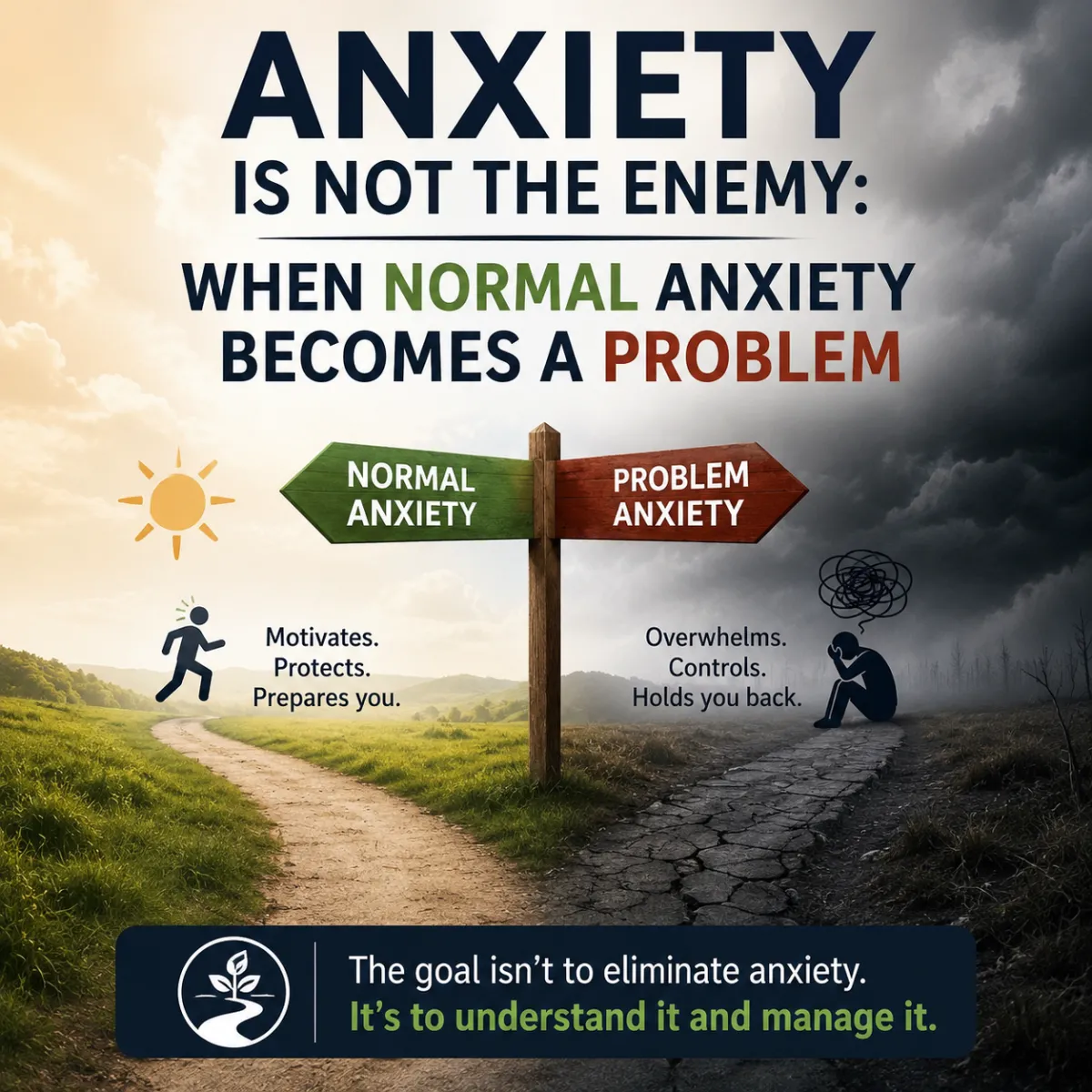
Anxiety Is Not the Enemy: When Normal Anxiety Becomes a Problem
Anxiety can protect us. The problem begins when the alarm keeps ringing long after we need it.
If anxiety has been taking up too much room in your life, it can help to understand what is happening before you try to force it away. The purpose of this article is not to give you another reason to judge yourself. It is to make the experience a little less mysterious and give you a few practical places to begin.
Anxiety is part of being human
Anxiety is not automatically a disorder. It is a normal response that can help us prepare, focus, scan for danger, and take action. A little anxiety before a job interview, a medical appointment, a difficult conversation, or a major decision can actually be useful. The trouble begins when anxiety becomes excessive, persistent, difficult to control, or starts interfering with everyday life. NIMH describes anxiety disorders as more than occasional worry or fear: symptoms may persist, show up across many situations, and worsen over time.
What makes anxiety clinically significant?
A diagnosis is not based simply on whether you feel nervous. Clinicians look at intensity, duration, frequency, avoidance, physical symptoms, and—most importantly—how much anxiety is interfering with your life. Are you missing work? Avoiding driving, social situations, medical care, stores, or travel? Losing sleep because your mind will not stop? Asking for reassurance over and over but never feeling reassured for long? Those patterns matter.
Anxiety can be uncomfortable without being dangerous
Anxiety can produce a pounding heart, tight muscles, sweating, stomach upset, dizziness, trembling, and changes in breathing. Those sensations can be frightening, but they are not proof that something catastrophic is happening. At the same time, new or unexplained physical symptoms should not automatically be labeled 'just anxiety.' Medical problems and medications can sometimes mimic anxiety, so a healthcare evaluation is appropriate when symptoms are new, severe, or unusual for you.
The goal is not zero anxiety
One of the most helpful shifts is to stop treating every anxious feeling as something that must be eliminated. Effective treatment often helps people become less afraid of anxiety itself. The goal is not to create a life in which you never feel nervous. It is to build a life in which anxiety no longer makes all the decisions.
Tips You Can Try Today
Name what is happening: 'I am feeling anxious' is different from 'I am in danger.'
Put both feet on the floor and slowly notice five things you can see around you.
Ask yourself: What would I do next if I were allowed to feel anxious while doing it?
Reduce repeated reassurance-seeking when you notice it gives only a few minutes of relief.
If anxiety is interfering with sleep, work, relationships, driving, eating, or leaving home, consider professional help rather than waiting for it to become unbearable.
A gentle reminder
Anxiety responds differently from person to person. A coping skill can be useful without working every time, and needing professional support is not a failure of self-help. If symptoms are new, severe, medically concerning, or significantly interfering with your life, seek appropriate medical or mental health care.
