
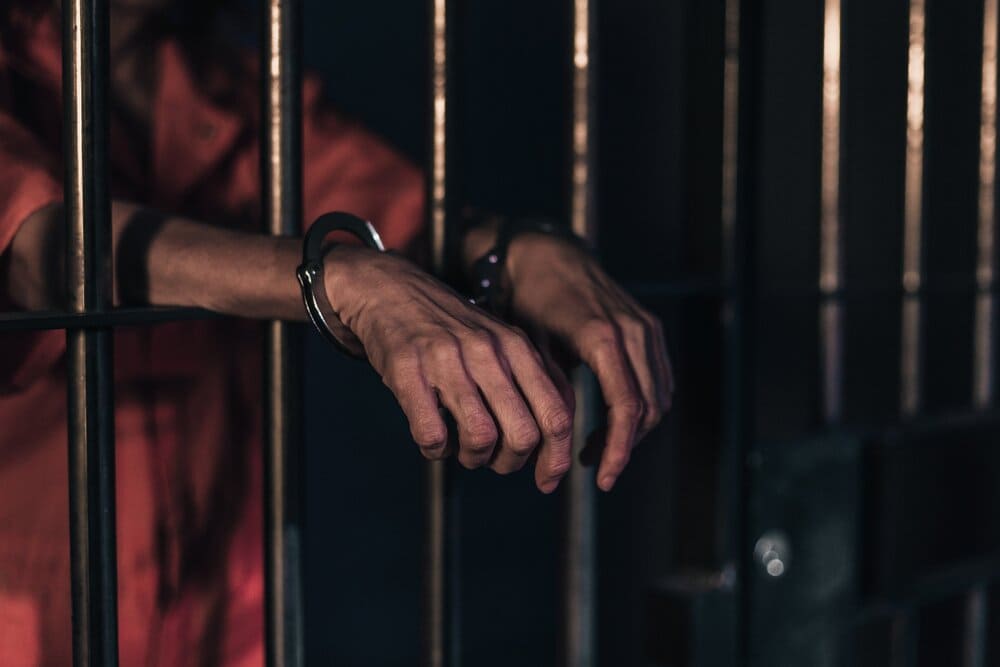
The Need for Real Change in Arizona’s Justice System
If you’re listening to this, you probably already know something is deeply wrong with the way we handle crime, prison, and reentry—especially in Arizona.
Today, I want to talk about one simple idea:
If we really care about safety and second chances, we have to change what we’re doing.
Because right now, the system is not working. Not for the people inside, not for the families, and not for our communities.
The Problem We Keep Ignoring
We see it every day:
People leaving prison with nowhere to go.
People living on the streets after serving their time.
People going back to prison again and again.
Everyone talks about “rehab” and “reentry,” but for most people, there is no clear path. It’s just words.
Politicians and the media focus on the worst stories. They talk about fear, not solutions. They talk about punishment, not change.
But if we never look under the surface—at trauma, addiction, mental health, sexual offending, and all the real reasons people end up in the system—then nothing improves.
How Arizona Sets People Up to Fail
In Arizona, very long prison sentences, plus strict supervision and registration rules after release, create a perfect storm—especially for people convicted of sex offenses.
The truth is uncomfortable but important:
Many people do not go back to prison because they committed another sex crime.
They go back because they broke a rule—missed a check-in, messed up paperwork, or failed to meet some part of supervision or registration.
Yet the public is led to believe that “sex offenders” are constantly reoffending. That story is simply not true.
Even some staff inside the system confuse “recidivism” with “any return to prison.”
But recidivism is supposed to mean committing the same kind of crime again—not just breaking a technical rule.
This confusion feeds fear. And that fear is used to justify more punishment instead of real change.
We Say We Believe in Rehabilitation… But Do We?
Arizona says it supports rehabilitation and reentry.
But the facts don’t match the slogan.
We hand out long sentences.
We don’t deal with the root causes.
People come out more hardened, more scared, and more unstable.
It’s like doing the same thing over and over and expecting a different result.
As long as stigma stays high and sentences stay locked into old ideas, we are not changing anything. We are just turning the wheel of the same machine.
The Registry: From Targeted Tool to Blunt Weapon
Laws like Adam’s Law and Megan’s Law created the national sex offender registry.
At first, these laws aimed to track the most violent sexual crimes.
But over time, the registry expanded to include much less serious cases—things like:
Public urination
“Mooning”
Consensual teen relationships
This mission creep was not the original goal.
The registry has become a political talking point more than a safety tool. It has not clearly made communities safer, but it has made it almost impossible for many people to rebuild their lives.
It raises a hard question:
If we truly believe registries protect the public, then why isn’t there a registry for:
People who murder
People who abuse their families
People who burn homes
People who steal life savings through fraud
Why is one group singled out for life, even when their actual re-offense rates are lower than the general prison population?
This is not about supporting sex crimes. It’s about asking why our system is driven more by fear than by facts.
Prison, Sentencing, and “Looking Tough”
Some people absolutely need to be in prison. Some are truly dangerous and cannot safely return to the community.
But most people in custody do not fall into that category.
In Arizona, courts and prosecutors rely heavily on:
Plea deals
Heavy charges
Mandatory sentences
Cases are pushed through quickly, with little room for nuance. Judges rarely get to look deeply at the person or the situation.
We saw this clearly in the 2024 election, when voters passed Proposition 313, changing the sentence for sex trafficking from 7 years to life in prison.
On the surface, that sounds strong—“tough on crime.”
But in practice, it sweeps up:
Young people
Non-custodial parents
People on the edges of a situation, not just violent traffickers
Once again, we choose punishment over precision.
A System That Feels Like Legalized Trafficking
Arizona has around 35,000 people in prison.
Of those:
Almost 9,000 are men convicted of sex offenses
Only about 115 are women
That means nearly one-third of the state prison population is made up of men convicted of sexual offenses.
When the state removes this many people from society, with so little attention to fairness, root causes, or future reentry, it starts to look like something else:
A kind of legalized human trafficking—where bodies are moved, counted, controlled, and profited from, but rarely healed.
The Truth About Risk and Re-offense
Arizona law says no inmate should be released homeless.
But the state makes an exception for sex offenders.
They are often released with no housing plan at all.
If they are so dangerous, why let them out to the streets with no support?
The truth is this:
The general inmate population in Arizona has a re-offense rate of more than 39%.
For people convicted of sex offenses, that rate is less than 9%, and most of those returns are for rule violations—not new sex crimes.
The actual rate of new sexual offenses after release is less than 1%.
So why do we keep acting as if this group is beyond help, beyond change, beyond mercy?
Why Change Is Not Optional
Most people don’t look closely at this system until it hits their own family.
A son.
A daughter.
A spouse.
A parent.
A friend.
Then, suddenly, the numbers have a face.
Without housing and jobs, people leaving prison can’t stand on their own.
Without therapy and treatment—especially for sexual offending and other specific behaviors—we are just sending them out to repeat the same patterns.
If we really want safety, if we truly care about children, families, and communities, then we must invest in:
Long-term, evidence-based treatment
Real reentry plans
Supportive housing
Paths to work and purpose
People in this group must be released with therapeutic support and a clear, realistic plan. Not dumped. Not forgotten.
A Different Path Forward
We say we believe in:
Second chances
Redemption
Treating others as we want to be treated
If we mean that, then our laws, our courts, and our prisons have to reflect it.
We need a new path—one that:
Heals, instead of only punishes
Restores, instead of discards
Builds futures, instead of sealing them off forever
By empowering change and restoring hope, we don’t just rebuild the lives of people coming home from prison.
We also protect and strengthen the communities that receive them.
Because in the end, there is no “us” and “them.”
There is only all of us, living together, safer, when real change finally happens.
